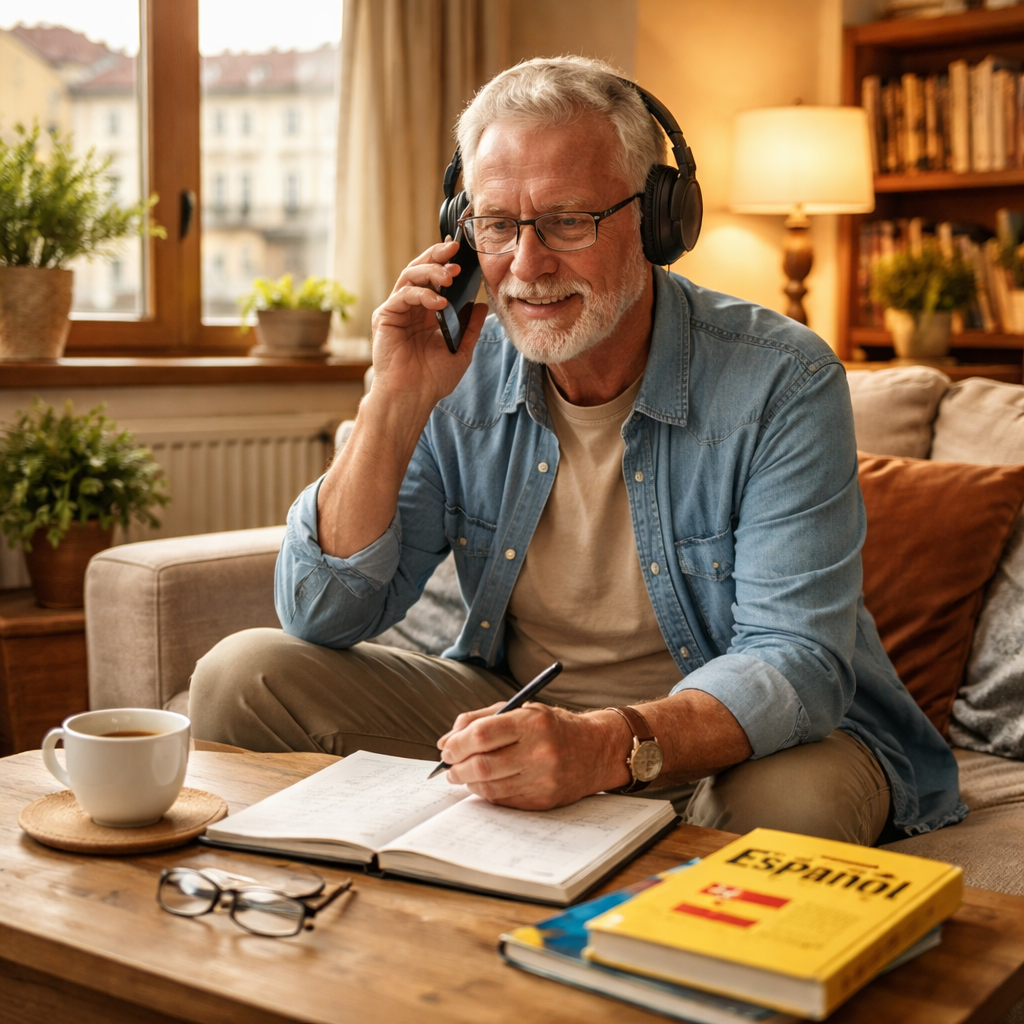
Learning a new language can feel scary, especially if you’re past the age of school. Yet many seniors discover that a short audio lesson each day can bring confidence and joy. In this guide, you’ll see why the best Spanish audio course for beginners is a gentle, daily habit that fits a relaxed lifestyle. We’ll walk you through the top pick, show you how to start, suggest extra podcasts, and give simple practice ideas you can use right away.
Older brains work a little different. Memory can be slower, but attention is still strong when you give it a calm rhythm. A short audio lesson lets you hear the sounds, repeat them, and let the brain store them while you relax.
Think about it this way: you sit with a cup of coffee, press play, and let the teacher speak at a pace that matches your comfort level. You’re not forced to read dense grammar tables. You’re just listening, repeating, and moving forward a step at a time.
And the best Spanish audio course for beginners should feel like a gentle walk, not a sprint. It should let you pause, replay, and absorb without pressure.
Why this matters:
Research shows that senior learners benefit from audio‑first methods. The Spanish Slow and Easy program was created for a mother who struggled with traditional classes. It focuses on clear speech, slow pacing, and one‑lesson‑a‑day structure. That design matches what brain science says about spaced repetition for older adults.
Here’s a quick look at how the top picks stack up for seniors:
| Course | Lesson Length | Speaker Pace | Senior Friendly? |
|---|---|---|---|
| Spanish Slow and Easy | 5‑7 minutes | Slow and clear | Yes |
| Storylearning Spanish Uncovered | 15‑20 minutes | Normal | No |
| Rocket Spanish | 10‑12 minutes | Normal‑fast | No |
Notice how the senior‑friendly option keeps each lesson under ten minutes. That matches the research from Your Spanish Hub which notes that short, focused practice improves retention for mature learners.
Price isn’t the only factor. A high‑cost course may give you more lessons, yet if the pace is too quick, you won’t finish them. The key is balance: cost, pace, and a structure that feels easy to follow.
Choosing the best Spanish audio course for beginners means looking at three things: how slow the speech is, how short each lesson feels, and whether the program lets you repeat without penalty. If you keep those in mind, you’ll feel less stressed and more motivated.
Finally, remember that learning is personal. The course that feels gentle to you may differ from a friend’s choice. Test a free trial if one is offered, and see if the voice feels like a calm guide rather than a race‑car announcer.
Let’s dive into the very first lesson of the Spanish Slow and Easy course. It’s called “Hello, friend!” and it’s built for absolute beginners. You’ll hear a warm greeting, a short self‑introduction, and a simple question about how you’re feeling.
Here’s how to set yourself up:
Why this works: The first listen builds exposure. The second listen adds active production. The notebook step turns a fleeting sound into a concrete memory.
After you finish, try saying the greeting out loud to your pet, a neighbor, or even the house plant. The goal isn’t perfection; it’s comfort.
When you feel ready, move on to the next lesson. Each lesson adds only a few new words, so you won’t feel overwhelmed.
Here’s a tip that many seniors love: pair the audio with a short walk around the house. Walk at a comfortable pace, listen, and repeat. The movement helps the brain lock in the language.
And if you ever miss a day, don’t worry. The course is designed for one‑lesson‑a‑day, but you can catch up by replaying the missed lesson. The important part is consistency, not speed.
For those who like a visual cue, the lesson page also includes a short script you can print. Reading the script while listening can reinforce the sound‑letter link.
Imagine you’re at a coffee shop in Mexico City. You hear the phrase you just learned, and you reply with confidence. That little win fuels the next lesson.
Remember to celebrate each tiny success. A smile, a sip of tea, or a high‑five to yourself can turn learning into a pleasant habit.
Once you’ve gotten comfortable with the core audio lessons, you might want a bit more flavor. Podcasts and YouTube can add variety without adding pressure.
One great option is Berges Institute’s list of beginner‑friendly podcasts. It highlights shows like Coffee Break Spanish, which offers short, scripted episodes that match the pace of a senior learner.
Here’s a simple way to use a podcast:
This method mirrors the spaced‑repetition style of the main course, so you stay in a familiar rhythm.
Another useful resource is YouTube’s “News in Slow Spanish”. The channel speaks clearly and slows the speed, which helps you catch each word. You can also adjust playback speed on YouTube if you need it slower.
When you watch a video, try this process:
These extra activities keep your ears tuned to different accents while staying gentle.
And here’s a quick tip: set a reminder on your phone for a “podcast hour” each week. Consistency beats intensity for older learners.
Below is a short video that shows how to adjust playback speed on most podcast apps. It’s a tiny trick, but it can make a big difference when the speaker feels a bit fast. https://www.youtube.com/embed/YlSIaCstou8
Remember, these extras are optional. If a podcast feels too fast, stick with the core lessons until you feel ready.
Learning a language isn’t just about sitting with a lesson. Real life practice cements what you hear. Below are easy ways to weave Spanish into daily routines.
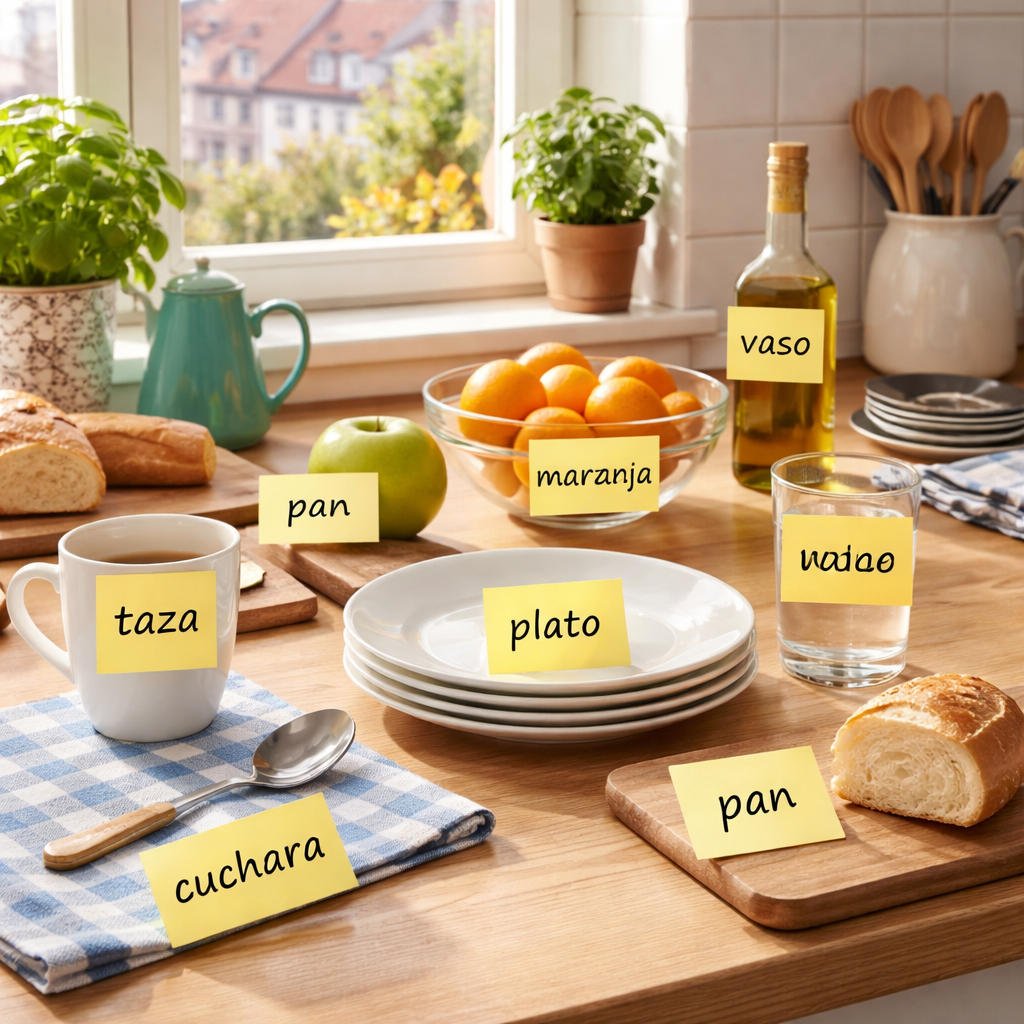
1. Label your kitchen. Write simple tags like “cuchara” (spoon) or “taza” (cup) on the items you use most. Each time you reach for a spoon, you’ll see the word.
2. Use a phrase of the day. Choose one short sentence from the lesson, such as “¿Cómo estás?” and say it to yourself whenever you pass a mirror.
3. Call a friend in Spanish. Even if you only know “hola” and “adiós”, a brief phone call can boost confidence. You can also leave a voice note on your phone in Spanish.
4. Practice at the grocery store. When you pick up an apple, think “manzana”. Say the word aloud before you pay.
5. Listen while you stretch. Put the lesson on a low‑volume speaker while you do gentle yoga. The calm movement pairs well with the gentle speech.
Why these work: They turn passive listening into active use without added stress. You’re not sitting in a classroom; you’re simply naming what you see.
Here’s a real‑world example: Maria, 68, moved to Costa Rica. She used the “label” trick in her kitchen for a month. By the end, she could ask the market vendor for “el pan” (the bread) without hesitation.
Another tip: keep a small “word jar”. Write a new word on a slip of paper each day, fold it, and drop it in a jar. When you feel bored, pull one out and say it aloud.
Finally, be kind to yourself. If a word slips, just smile and try again. The goal is steady exposure, not flawless recall.
The best Spanish audio course for beginners focuses on spoken words at a slow, clear pace. It gives you one short lesson a day, so you can repeat without feeling rushed. Apps often push many lessons at once, which can overwhelm older learners. An audio‑only format also lets you practice while resting, which fits a relaxed lifestyle.
No. The course begins with simple greetings and basic nouns. Each lesson introduces just a handful of new words, and you repeat them out loud. This step‑by‑step build‑up means you can start even if you’ve never heard Spanish before.
Each lesson is about five to seven minutes long. Listen once, then replay while you repeat the phrases. The whole process usually takes 10‑12 minutes. That fits well into a coffee break or a short walk.
Yes. The recordings are clear and spoken slowly, which helps people with mild hearing loss. You can also find the transcripts on the lesson email to read along while you listen.
The Spanish Slow and Easy site offers a few sample lessons you can try before committing. This lets you hear the pace and voice style to see if it feels comfortable for you.
Set a tiny goal, like listening every morning with your coffee. Celebrate each day you complete a lesson. Small wins add up, and the gentle pace prevents burnout.
It’s optional. If you enjoy reading, a simple phrasebook can help you see the words in print. But the core strength of the best Spanish audio course for beginners is that you can learn without a heavy book.
Just replay the missed lesson when you have time. The course is flexible, so you can catch up at your own speed. Missing a day won’t break your progress.
Finding the best Spanish audio course for beginners doesn’t have to be a puzzle. A gentle, slow‑paced program like Spanish Slow and Easy fits the rhythm of senior life, offers short daily lessons, and lets you practice at home or on the go. Start with the first listening lesson, add a calm podcast or YouTube clip when you feel ready, and sprinkle simple practice moments throughout your day. Remember, learning is a marathon, not a sprint. One small step each day builds confidence and opens the door to new conversations, whether you’re strolling through a market in Mexico or chatting with a new neighbor. You’ve got the tools, the plan, and the patience. Go ahead and press play; your Spanish adventure begins now.
